B2B SaaS
Opta Live Cricket
Eleven cricket components delivered across a live data product, including three new prediction models expanding Opta Live's real-time coverage capabilities.
Category
Product Design
Client
Stats Perform
Year
2023
Project overview
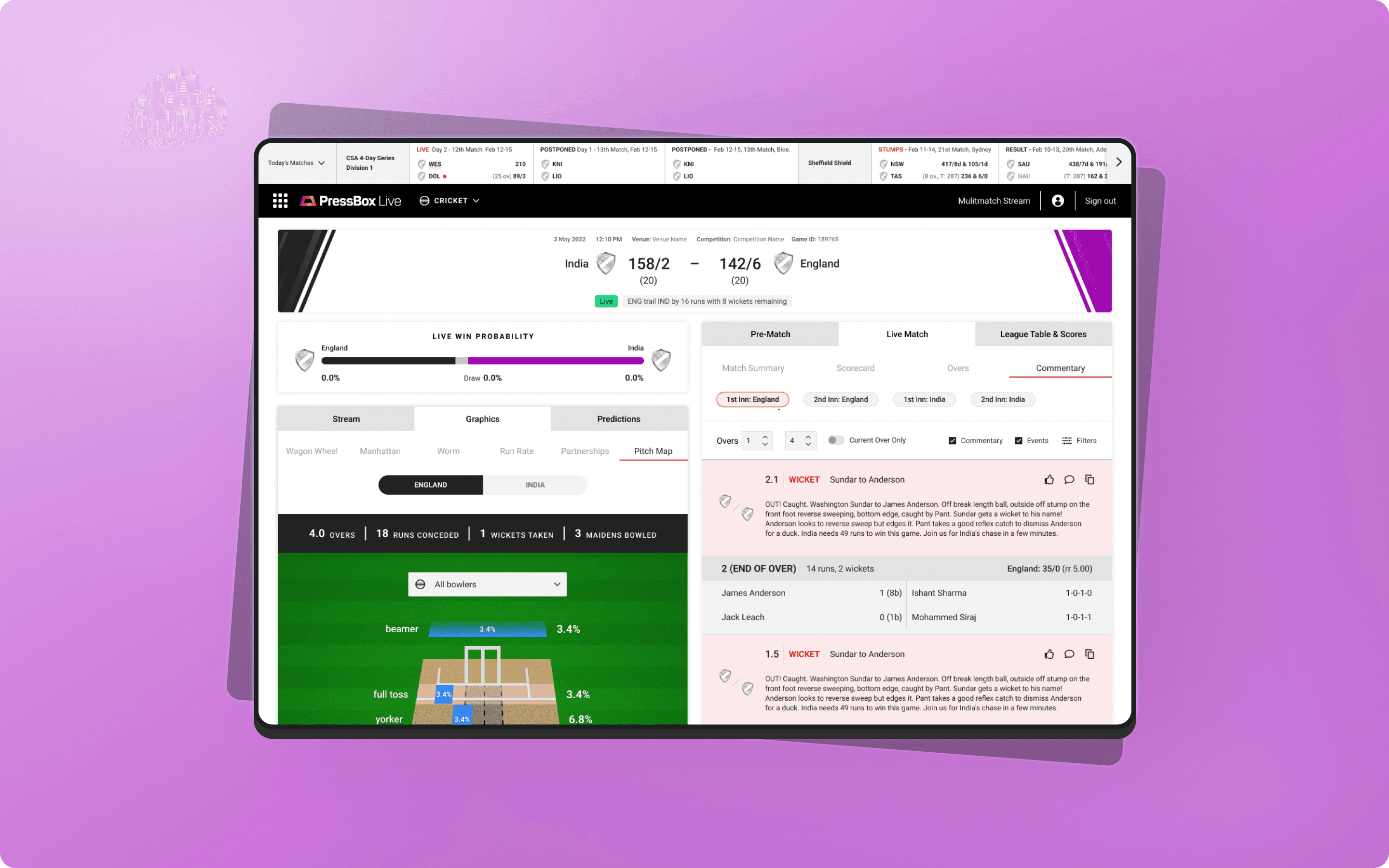
Opta Live is Stats Perform's live match coverage tool for sports media professionals, giving cricket teams, broadcasters, editorial teams, and bookmakers real-time insights, play alerts, predictive metrics, and data visualisations during a match.
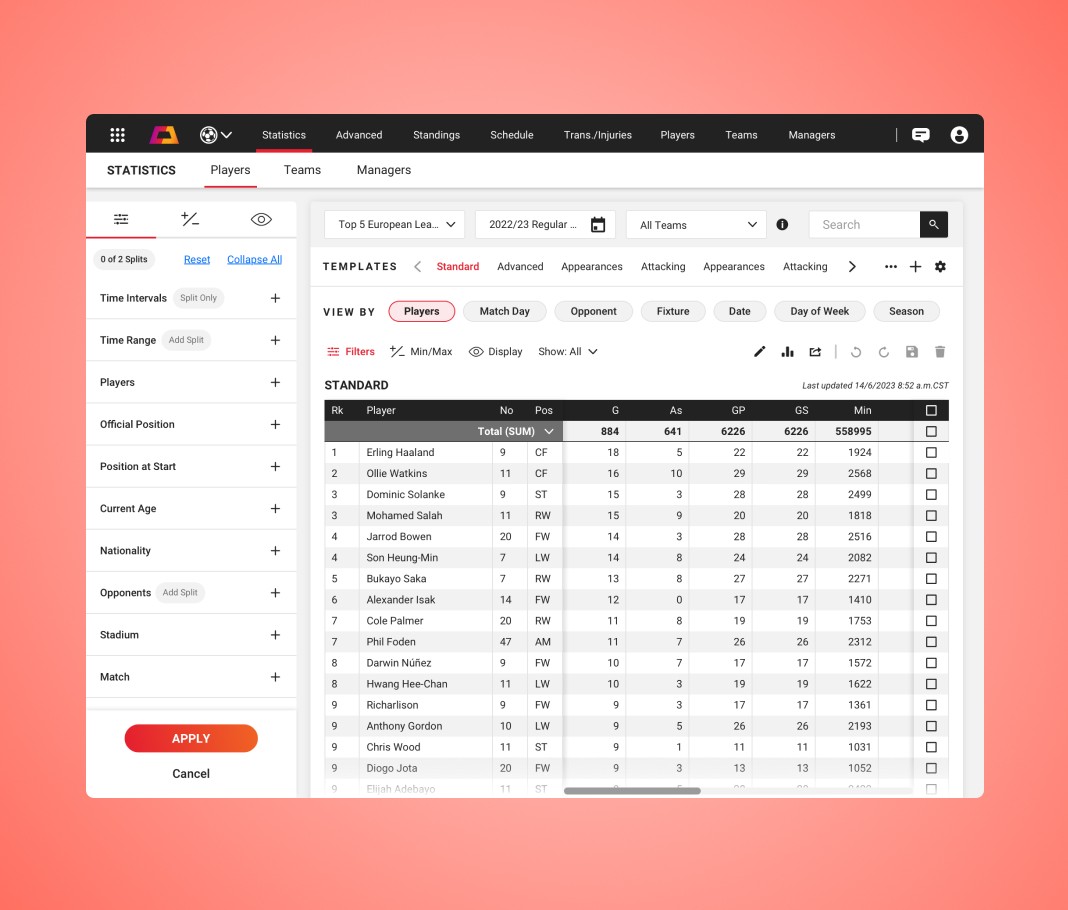
It sits within the broader Opta Fan Engagement suite alongside Opta Search, which handles historical data querying, and Opta Graphics for visual content output.
When Stats Perform moved to expand Opta Live's coverage into cricket, the platform already had a strong foundation built on prior product discovery research with editorial teams. My role was to take that foundation and extend it into a sport with a different structure, data vocabulary, and match cadence.
This was primarily a UI design project. I worked with cricket subject matter experts and product to audit Opta's existing standalone cricket widgets, identify which were worth adapting for the platform, and design the new components needed to support cricket-specific features.
A Sport That Plays by Its Own Rules
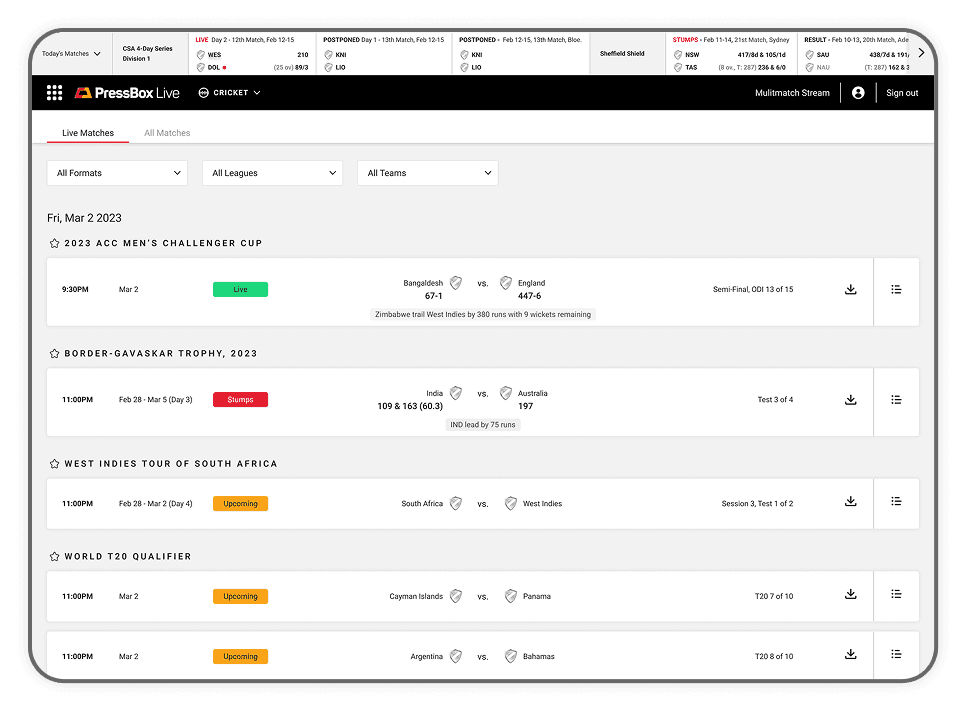
Cricket does not map neatly onto the patterns of other sports. A football match has two halves and a final whistle. A Test cricket match can run across five days, with scheduled breaks for lunch and tea, stoppages for bad light or rain, and day-end close of play.There were also other single-day formats, ODI and T20, that needed to be considered.
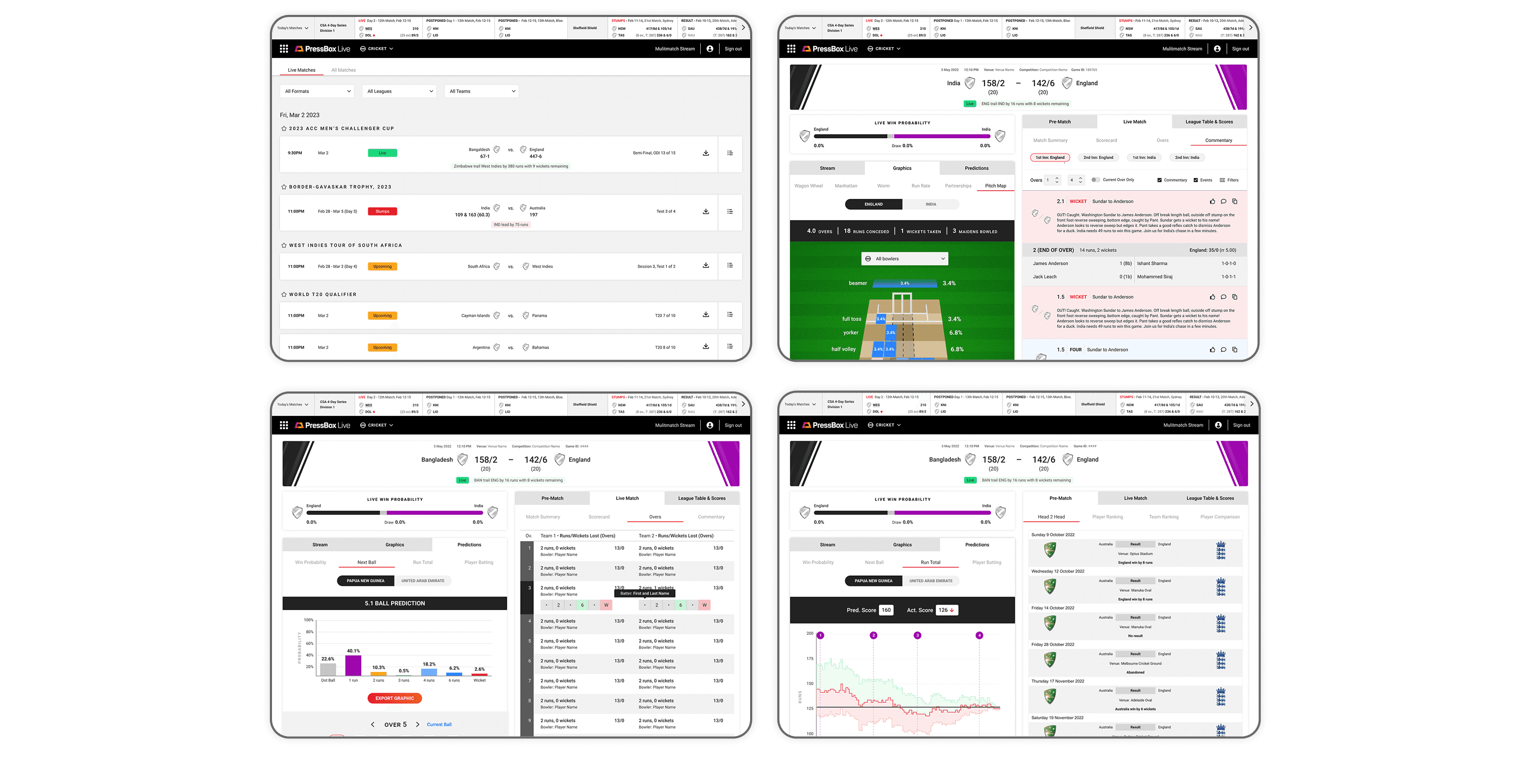
Cricket's match structure introduced scheduling considerations that didn't exist in other sports. Multi-day Test matches, mid-match breaks, and weather stoppages meant a standard schedule component wouldn't cut it. I leaned on existing design patterns from other sports coverage sites and worked closely with developers to define the logic and build cricket-specific schedule components that could handle these states without breaking.
Every component needed to be considered in the context of how cricket is actually followed and reported on.
Choosing What to Bring In
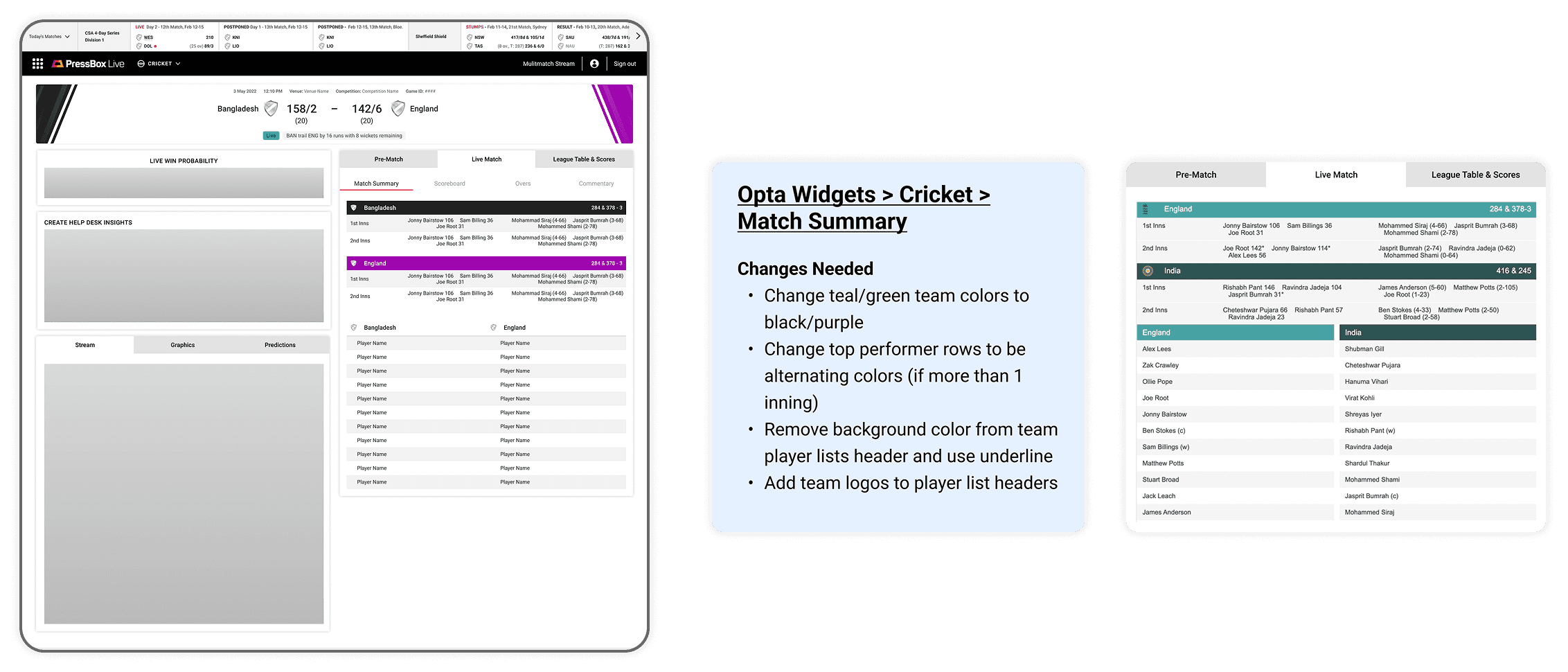
Opta had an existing library of standalone cricket widgets. Rather than designing everything from the ground up, I worked through that library with cricket SMEs and product to assess what was worth bringing into Opta Live and what needed to be redesigned to fit the platform's design system and the needs of live coverage users.
Adapting them for Opta Live meant stripping back what was not relevant to a live editorial workflow, rebuilding them within the platform's component framework, and in some cases redesigning the information hierarchy entirely.
New Ground: AI Prediction Models
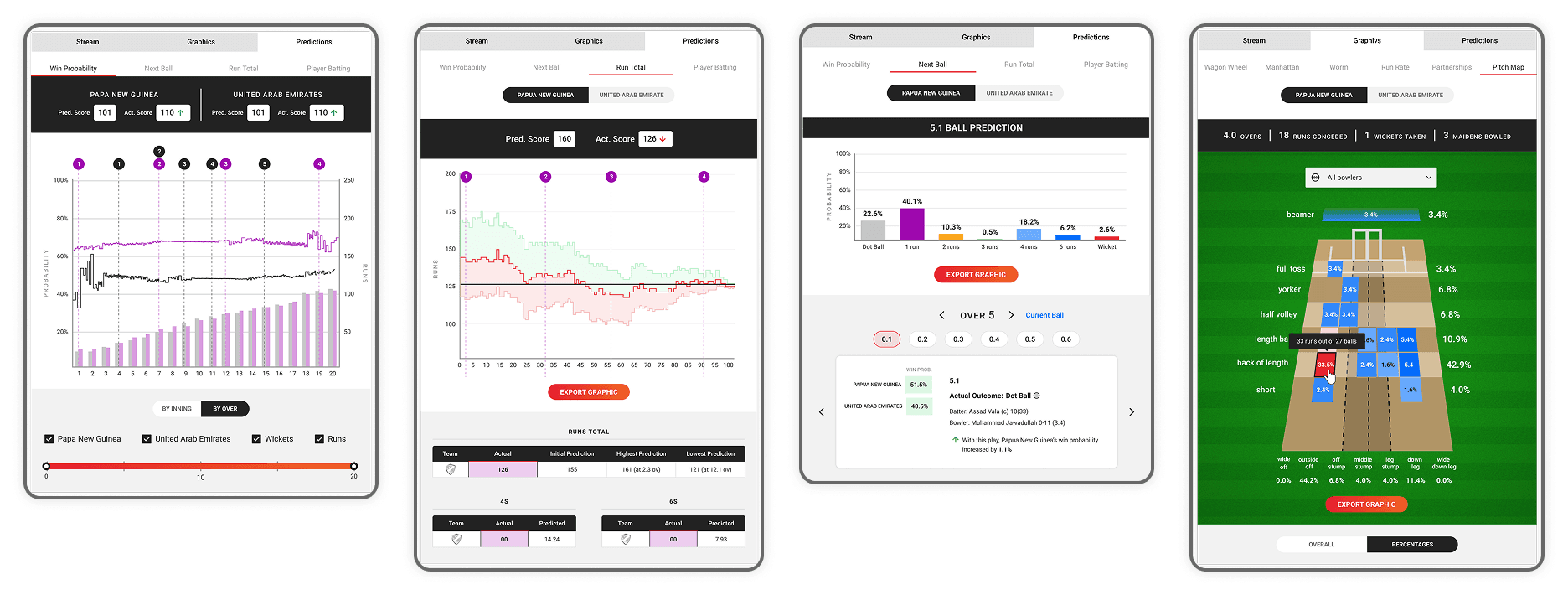
The four new pieces of work in this project included the visualisations for Opta Live's cricket three prediction models, a ball-by-ball win probability tracker, a total run predictor, and a next ball predictor. Plus, a new pitch map visualization.
The win probability model tracked each team's likelihood of winning across the course of the match, updating ball by ball. The design challenge was presenting a model that produces a continuous stream of probabilistic data in a way that was readable and useful under live match pressure, where analysts have seconds between deliveries to absorb information and move on. With the run total predictor showing the predicated total runs per over.
The next ball predictor went further. Given the current match state, it surfaced the probability distribution across possible outcomes on the next delivery including fours, twos, wides, stumps, and other events. This was a new AI capability for Stats Perform, and the initial design brief was to visualise what the model produced as it stood, with the understanding that the UI would be refined based on client feedback once it was in front of real users.
Models required close collaboration with developers to understand what the data structure looked like and what could be surfaced reliably in a live context before committing to a design approach.
Process
With no dedicated research phase for this expansion, I worked from the editorial workflow research conducted during Opta Live's original product discovery. That gave me a strong enough foundation to move quickly on most components, but cricket-specific nuances still needed to be validated. Given the turnaround time, validation would happen post-production through Pendo analytics and direct client conversations.
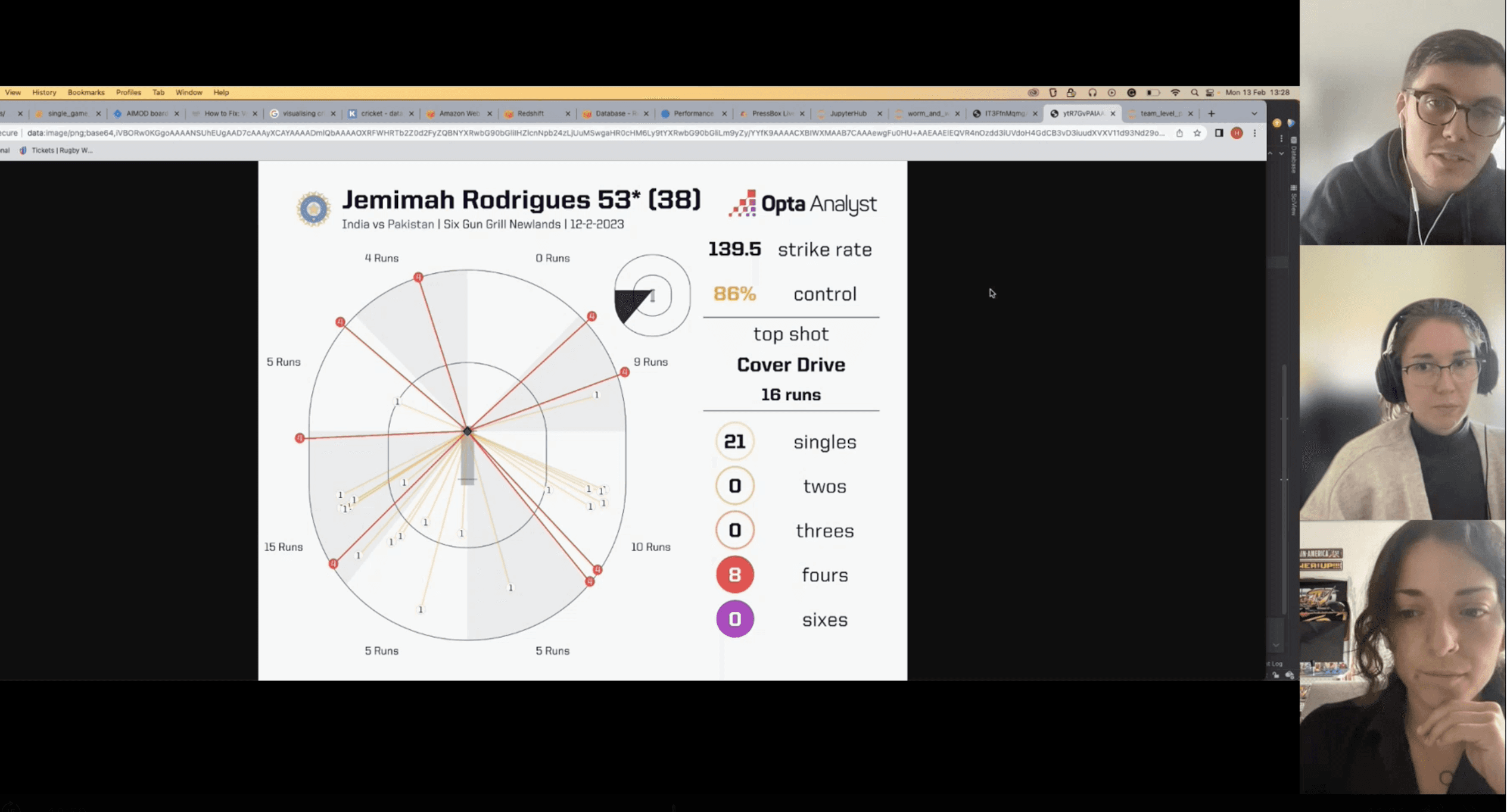
Cricket SMEs were my starting point for getting up to speed on the sport's data structure and terminology. Once I had a solid grasp, I ran sessions with developers who were equally unfamiliar with cricket, walking them through how to read a scorecard and interpret the stats to make sure the right data was being pulled and implemented correctly.
Outcome
The project delivered more than 11 cricket components across data tables, editorial insights, match schedules, visualisations, and predictions, including the three new AI prediction models. The design system held across all components, keeping the experience consistent with the broader Opta Live platform while accommodating cricket's structural differences.
Post-launch feedback and Pendo data would inform the next round of iteration, particularly on the prediction model interfaces where real-world usage patterns were expected to surface refinements the initial design did not anticipate.