Enter Password
* The details here are confidential. Feel free to reach out if you're interested.
Mobile App
Sign Up Redesign
A signup flow redesign to reduce drop off, lower support overhead, and create a path re-entry for new customers who dropped mid-registration.
Category
Product Design
Client
betr
Year
2026
Project overview
Following a new marketing campaign, I reviewed betr's sign-up journey to identify reasons for customer drop off and improve retention. The patterns that emerged were two fold. One rooted in a legacy migration, and another in a missing recovery path for customers returning to the verification process.
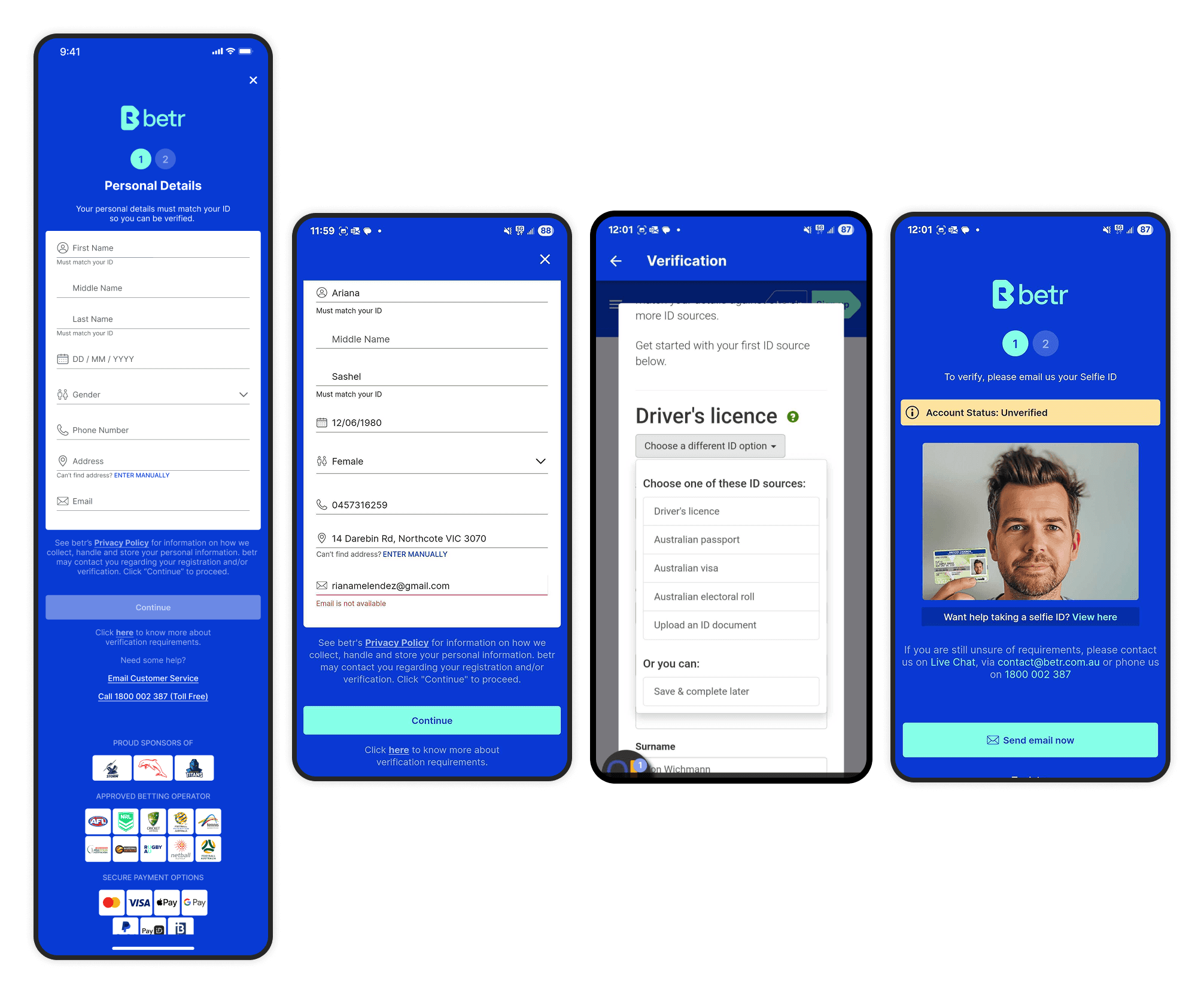
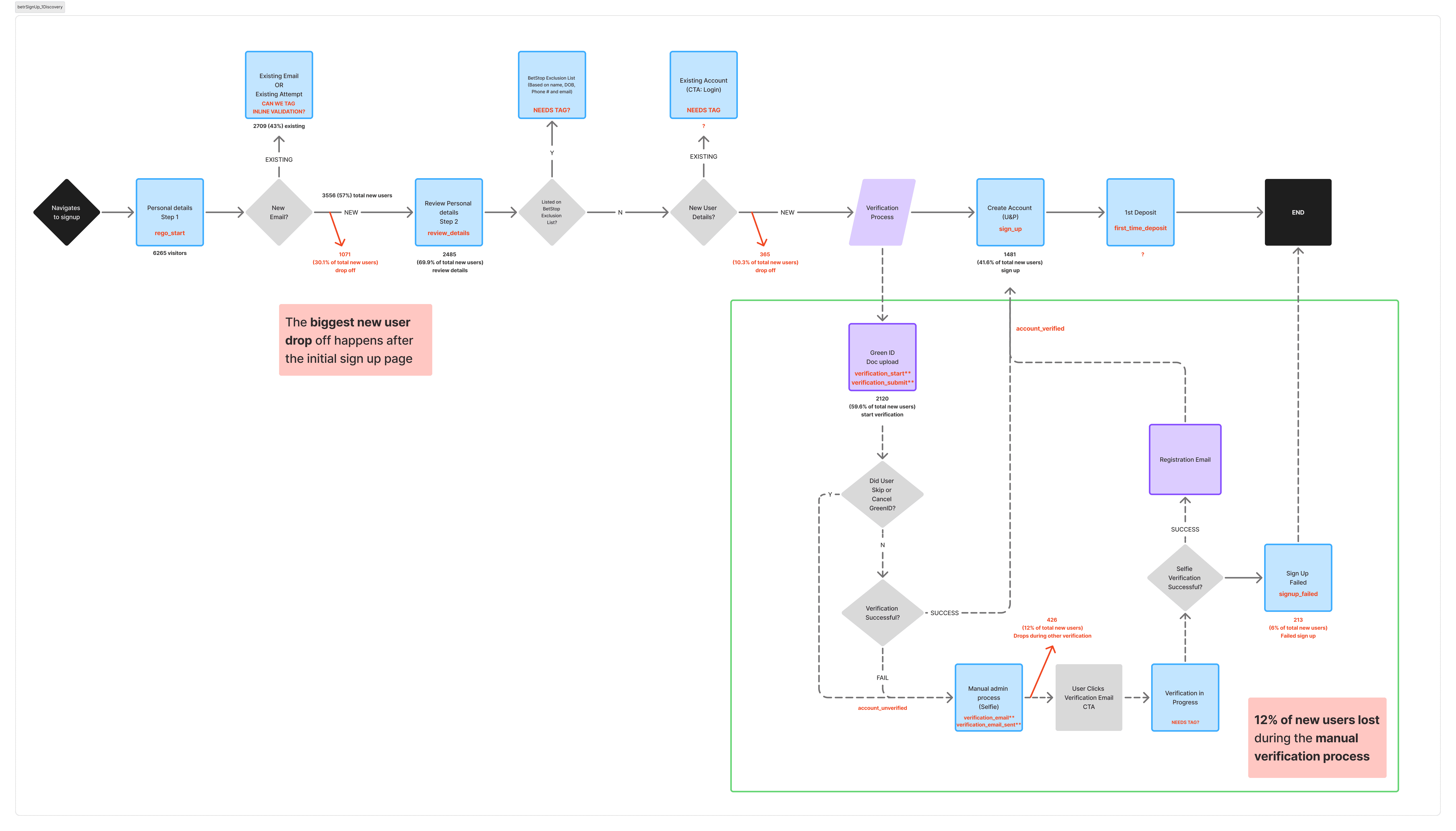
Existing sign-up flow.
Understanding the funnel
Between 2024-25, betr merged with BlueBet and TopSport, and some customers arriving at sign-up already had accounts carried over from those platforms. The brisk migration meant login credentials varied between username, email address or client ID. None of which were interchangeable.
Many migrated customers had no idea an account existed in their name under betr. With no prompt to check for an existing account and no explanation of how to log in, customers would attempt to register, hit an error, and end up in the support queue.
After filtering out undesirable traffic, e.g. scammers trying to create multiple accounts, I worked with the data team to identify where customers dropped after showing intent. Week over week data showed almost half of users were existing customers, approximately 30% of total new users dropped before completing their personal details and 12% dropped when redirected to manual verification.
The drop at personal details pointed to friction and potential uncertainty in the flow itself. The drop at verification pointed to a dead-end on the platform where prospective customers could not re-engage without contacting support.
What the flow was missing
The verification dead-end was a product gap. When a prospective customer submitted their personal details, their email was registered in the database within a draft table, effectively marking them as a registered user even without creating a password or completing their profile. If they left before finishing, they couldn't return without contacting support, who had to manually approve them.
They had committed enough to enter their details but had no path forward on their own if they dropped at manual verification because, say, they didn’t have a form of ID on them at the time.
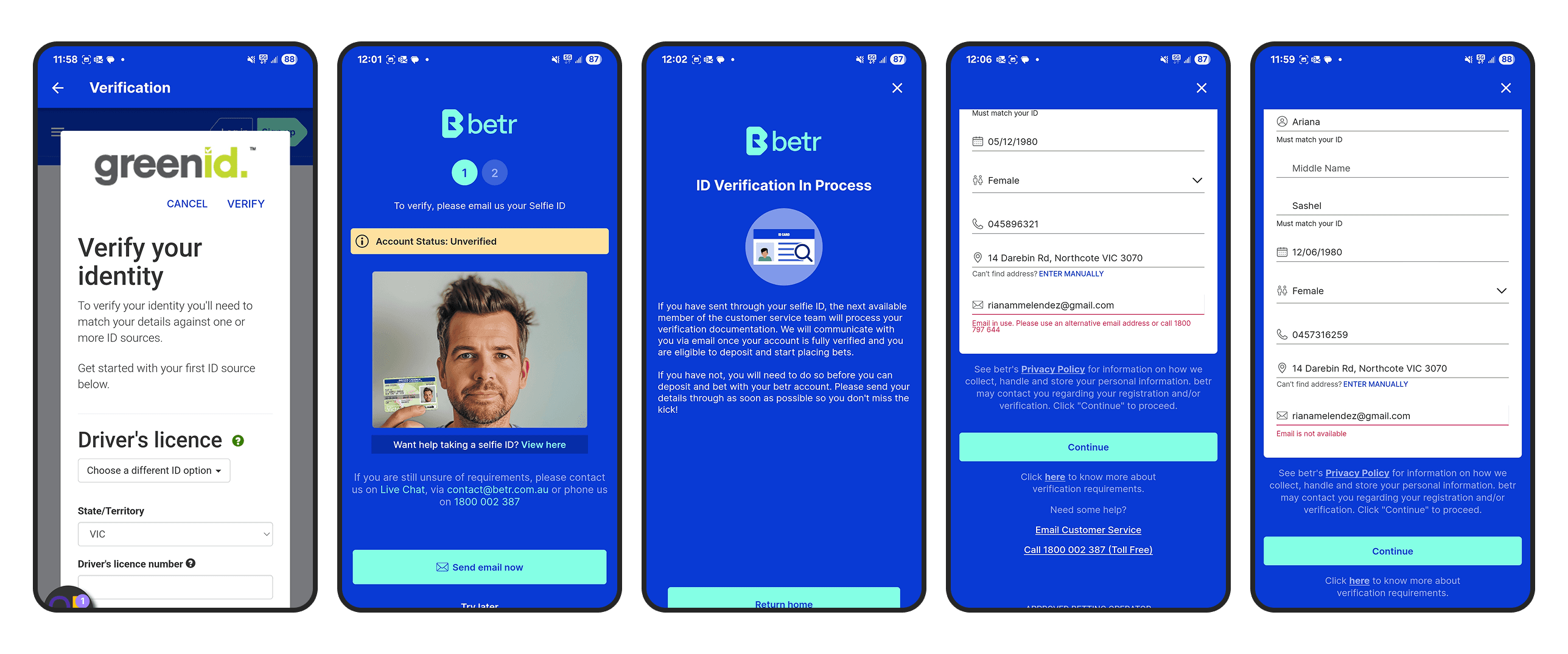
Existing verification flow blocked verified or unverified customers saved in the database with no way for returning unverified customers to continue verification independently. Increasing reliance on customer support.
What I designed
The redesigned flow introduced an email-first check at the start of registration. If an address matched an existing account, we surfaced a contextual screen suggesting they likely had an existing betr account through BlueBet or TopSport, along with guidance on what their username might be and how to log in with a one-time code. This was a short-term bridge while the team worked toward migrating all accounts to email-based login.
For new customers, I introduced a shell account model. By asking customers to set up their email and password upfront, before personal details or verification, the flow established a recoverable state early.
This served two purposes:
It gauged intent by asking for account creation before the heavier steps.
It meant anyone who dropped at verification could return and pick up where they left off without contacting support, while creating a new CRM opportunity by giving betr the ability to proactively reach out to users in regards to their registration.
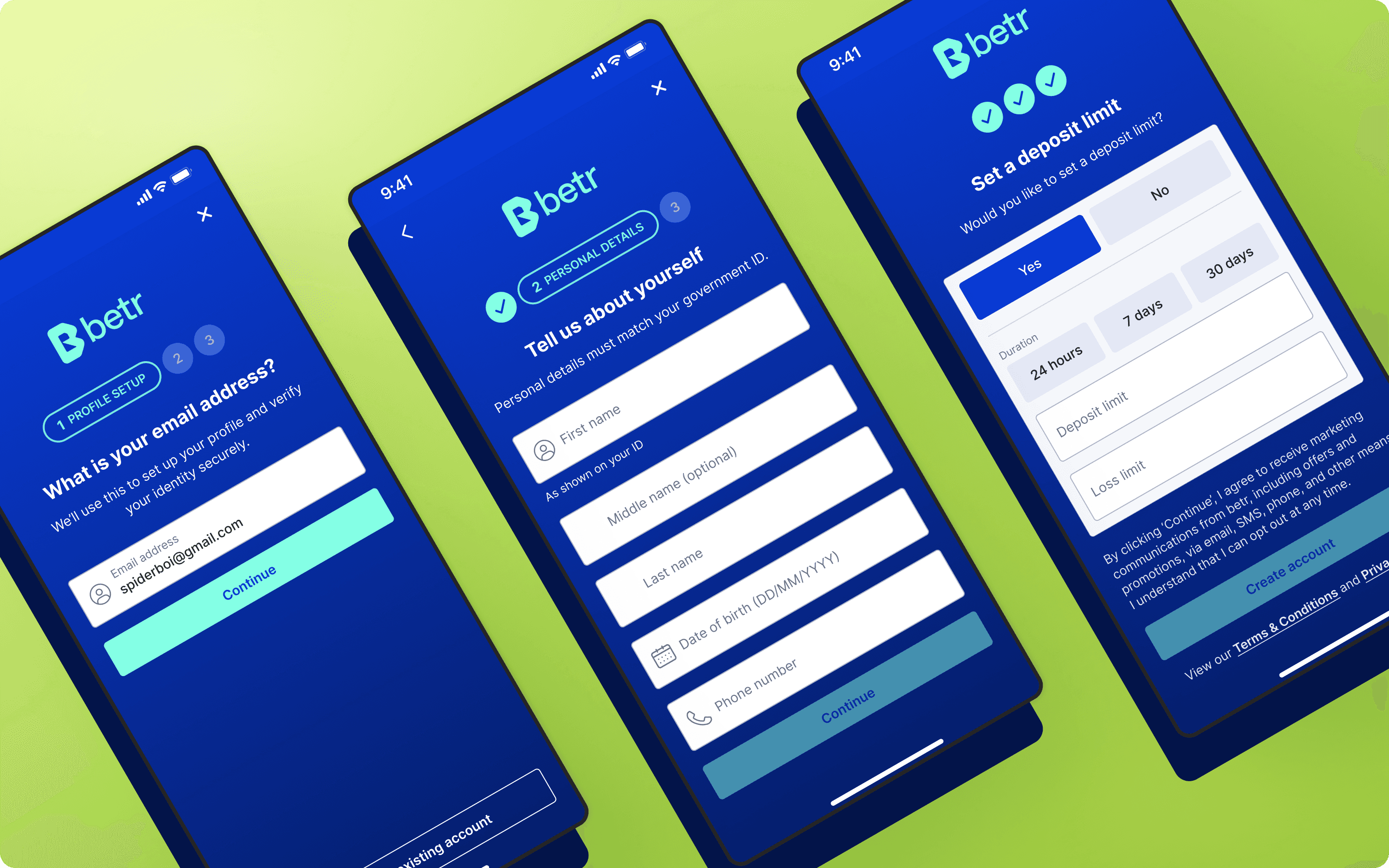
I used a step-by-step design to reduce cognitive load and build rapport with clear progress signposting and copy that set expectations before asking new customers for additional information, like photographing their ID or completing biometrics. I also redesigned the input fields to clearly show field labels and the information required.
Utilizing tech's ongoing effort to support biometrics verification in-app, I reskinned their third-party verification integration to match betr's branding for a consistent look and feel throughout.
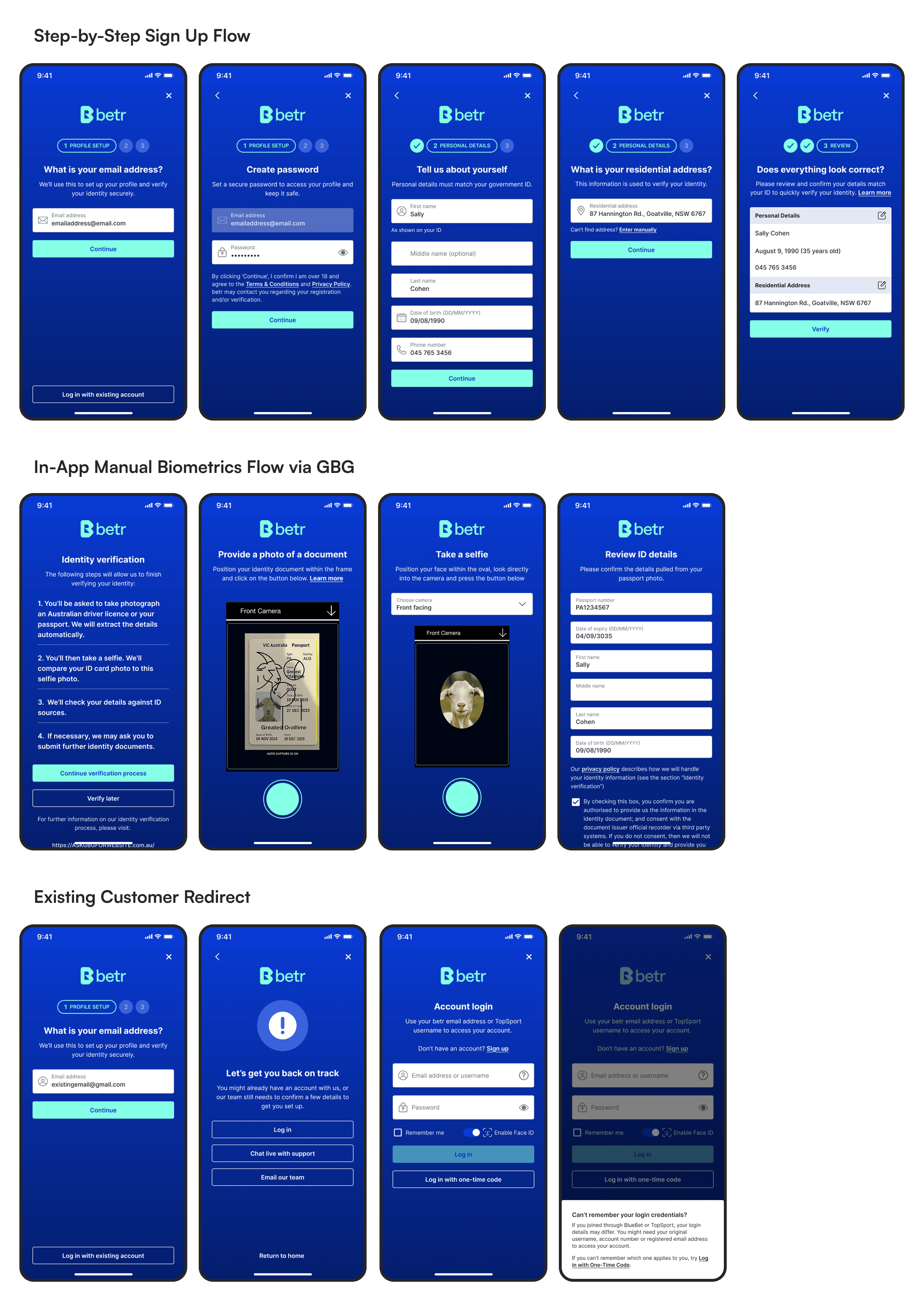
Designs used a step-by-step process to reduce cognitive load and build rapport with customers before asking for additional verification documentation. Upfront email verification redirected customers based on their account status.
Stakeholder alignment
Regulatory requirements for wagering platforms shaped every decision in this flow. I worked closely with legal to ensure the verification steps met compliance obligations, with marketing to understand the intent behind the campaign driving new traffic, and with customer service and data to validate the patterns the data was surfacing. The shell account model required careful alignment with tech around what state could be persisted and for how long.
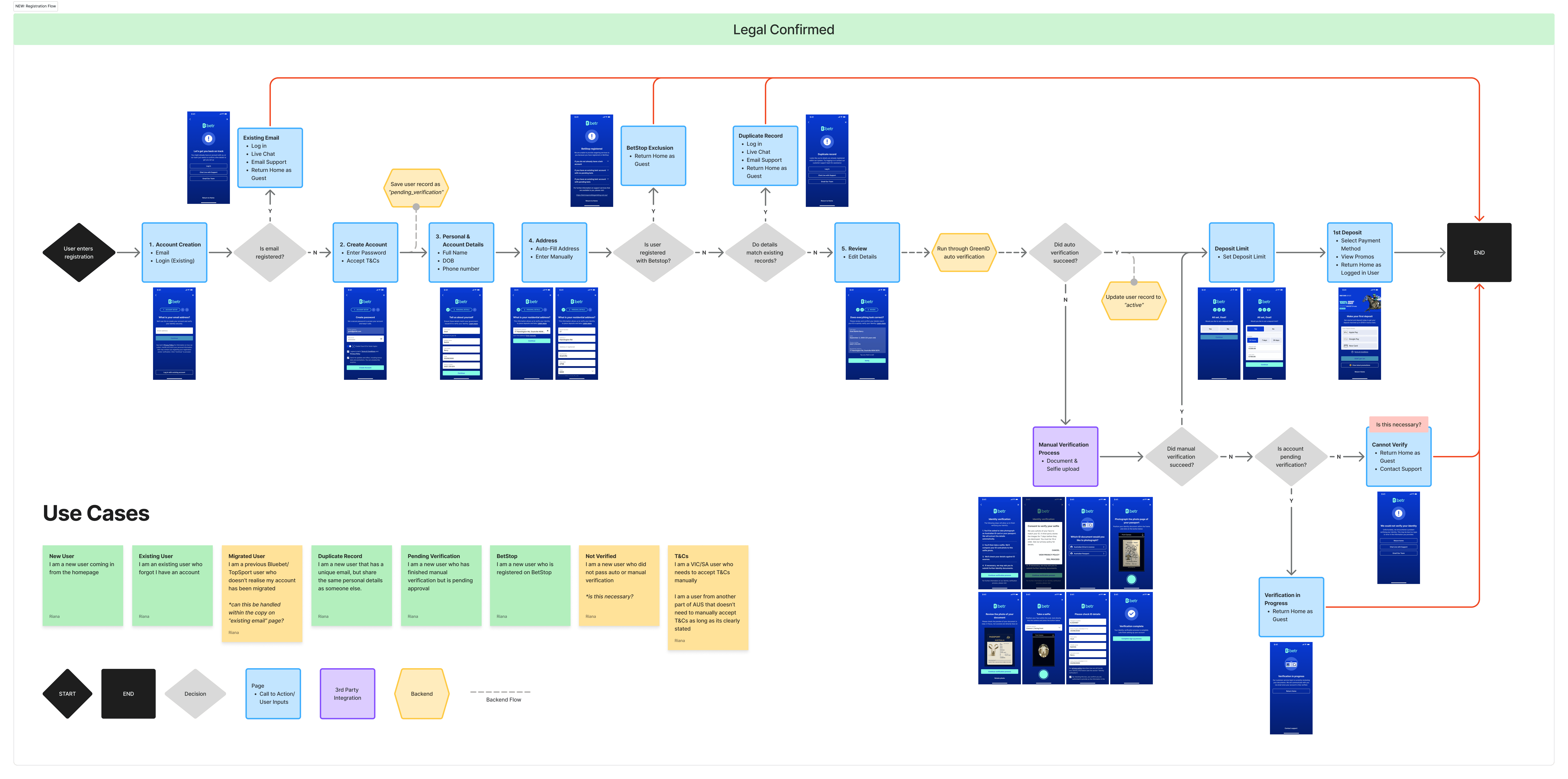
Throughout the process, I worked with legal, marketing, customer support and data to outline use cases and edge cases, identify areas of opportunity, confirm legal copy and tag for usage analytics.
Outcome
The project is scheduled for production, but the diagnostic and design work established a clear baseline and a concrete direction. The redesign was built to reduce misrouted traffic at the top of the funnel, cut support contacts driven by both the migration confusion and the verification dead-end, and give betr a structured way to re-engage customers who had started but not finished signing up.